


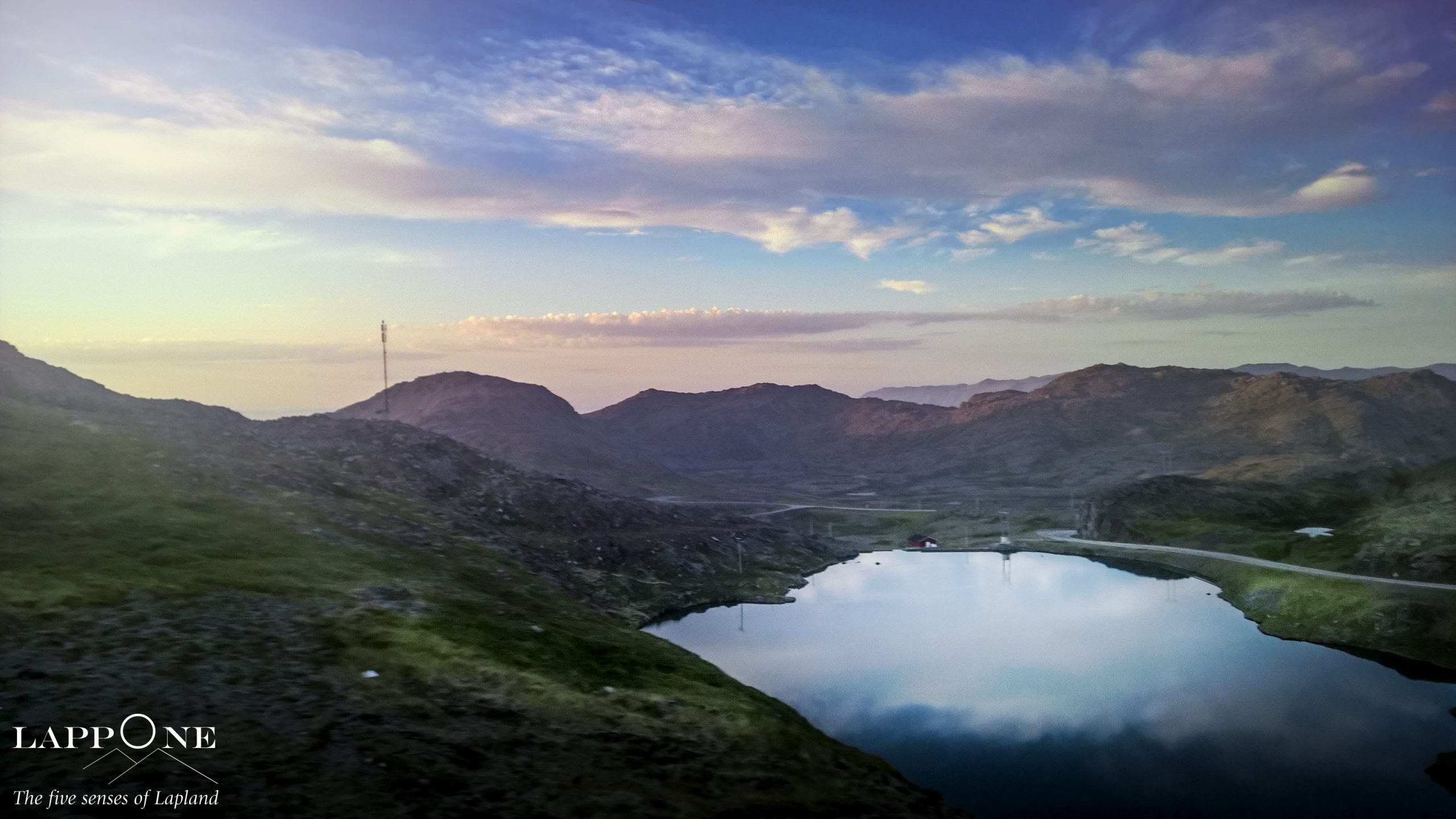


This summer trip to North Cape takes you through the heart of Lapland, following the footsteps of the Italian explorer Giuseppe Acerbi on a unique cultural expedition to the northernmost point in Europe.
The name “North Cape” was given by the English explorer Richard Chancellor, who named it after landing there in 1553 during his expedition to find the “northeast passage.” After his trip to North Cape, Chancellor died in a shipwreck while trying to pave the way for future explorers.
But why did we decide to offer a trip to North Cape? The answer is lost in history.
Two Italian explorers were the first to travel to North Cape. The first was Francesco Negri, a priest from Ravenna, passionate about anthropology and a great scholar of nature. Negri took part in an expedition to North Cape by sea in 1663, convinced that it was impossible to live in those areas. Instead, he found a people, the Lapps, from whom he learned and spread the technique of cross-country skiing, until then unknown outside those areas.
Over a century later, in 1798, Giuseppe Acerbi, from Mantua, together with his friend Bernardo Bellotti from Brescia, undertook a journey to North Cape by land, passing through Lapland, which until then was unexplored territory.
From this trip to North Cape, Acerbi learned the practice of the sauna, which he made known to the rest of the world. To this day, ski and sauna are the only two words in the Norwegian and Finnish languages that are used almost everywhere in the world.
Summer Trip to North Cape – A Cultural Expedition Through Lapland
In 1798/99, Giuseppe Acerbi from Mantua, a man of great culture, a musician and botanist, at the age of just 25, together with an Italian friend, Bernardo Bellotti from Brescia, set out on an exploratory journey that started from Oulu, in central Finland, and, crossing the whole of Lapland, arrived at the North Cape (Norwegian: Nordkapp). Followed the valleys of the Tornio, Muonio, Ounas and Alta rivers, along the current border between Sweden and Finland, and subsequently through Norwegian Lapland.
The riches of Acerbi’s exploration are the observations and documentation he collected about the Lapp people, their customs, social life, and their relationship with the land and nature. The journey lasted almost two years in total, and the leg from Oulu to Lapland over two months, in the most hostile season for the traveler: summer.
His travel diary was first published in English, and then, posthumously and abridged, also in Italian. In this journey, we will retrace the path that led him to the summit of Europe, the North Cape, on a profound and unforgettable journey, rich in culture, history, and breathtaking landscapes. All this is surrounded by the ever-present reindeer, Lappish culture, endless bodies of water, and the white nights, the incredible phenomenon whereby it never gets dark during the summer.
Land at Oulu Airport, where we'll welcome you personally. Transfer to the city center and overnight stay at a hotel in the city center. Opportunity to take night walks to observe the white night and city life (Oulu is the only truly large city we'll see). A welcome dinner will be served in a traditional restaurant. Opportunity to take walks through the white night.
Breakfast at the hotel. In the morning, we'll explore Oulu, including Ainola Park, where Giuseppe Acerbi played in public during his winter stay in the city (there's a monument dedicated to him, the only one dedicated to an Italian in Finland). We'll also visit other attractions, such as the Market Square (Tori) with its statue of the stocky policeman (Toripolliisi), the pedestrian street Rotuaari, and the magnificent cathedral. Lunch will be free (there's no shortage of restaurants of all kinds).
In the afternoon, we'll transfer by private vehicle to Kemi. This will undoubtedly give us a good idea of the type of terrain our hero must have crossed, here where "the civilized world ends. "Here we'll visit the old port, around which the urban settlement of Kemi developed in the mid-19th century. Strolling among the harbor houses, now mostly used as bars, you'll get a glimpse of life in those days.
In the evening, we'll visit a Siberian husky farm, located in an area of great natural beauty. Here, we'll meet these magnificent animals and their breeders, who will give us a glimpse into their lives in these beautiful, remote lands. The visit will last about an hour and include a traditional dinner in the atmospheric restaurant.
Tornio, where you'll stay in a family-run hotel in double rooms. You can wander freely through the white night in the pleasant surroundings of the hotel, all the way to the Swedish border, just a few steps away.
After breakfast, transfer (about 15 minutes) to Kukkola, an ancient fishing village perfectly preserved in its historic part. Here you can learn all about the area's ancient traditions and understand how humans colonized these cold and inhospitable lands for centuries. Kukkola is where Acerbi discovered the sauna ritual, which he was the first to describe outside of these areas. The international use of the term sauna, the only Finnish word known worldwide, is largely due to him.
In Kukkola, after visiting the fishing village and the fish museum, we'll watch fishermen trying to catch salmon with a special net. This fishing technique dates back to the Middle Ages and is unique to this village, so much so that it is currently being considered for inclusion in the UNESCO Intangible Cultural Heritage of Humanity list. You too can try the technique, with the help of our guide! Lunch will be served with grilled whitefish in an 18th-century hut—a unique experience, and not just from a culinary perspective.
In the evening, you'll check into your rooms at the adjacent resort, where you'll have free time to enjoy a sauna or simply explore the surrounding area. Dinner is free.
Buffet breakfast. Early in the morning, we'll depart for a journey along the Tornio River Valley. After about an hour, we'll stop in Aavasaksa, where we'll learn how this valley was used by the French scientist Maupertuis to measure the curvature of the Earth's surface. Aavasaksa has an interesting history, as it was Lapland's first tourist resort. A short, easy hike (about 30-45 minutes, depending on the route) will allow us to enjoy the most beautiful views of this part of Lapland.
We'll then move (10 minutes) to Matarengi (Övertorneå in Swedish), where we'll visit an interesting artisanal souvenir factory made from wood and other local materials. Here, you can purchase unique souvenirs from your trip. We'll also visit the site (Särkiläx) of the town's first church, which was destroyed by a flood in the early 17th century.
The next stop is Juoksengi (20 min), a village within the Arctic Circle. In the evening, after another 2-3 hours of travel, we'll reach Hetta via Kolari and Muonio (about 3 hours total, including breaks). Hetta is a hamlet of the municipality of Enontekiö, one of the most sparsely populated in Europe (density 0.2 inhabitants per square kilometer!). Here we'll stay in a family-run hotel, in a room with private bathroom.
A traditional dinner (included) will be served at the hotel restaurant. We can then walk to the shore of beautiful Lake Ounas, where we can observe the white night in an almost surreal silence.
Breakfast at the hotel. In the morning, we'll reach Kautokeino (1.5 hours), where we'll visit a craftsman's workshop and shop: Juhls, which is more than just a jewelry workshop; it's the realization of a true dream of two incredible people, whose history we'll learn. Kautokeino is a village with a majority Sami population, the last indigenous people in Europe. We'll learn about the culture of these proud people.
We'll also have time to visit the wooden church, built in 1965 in typical Lappish style, on the site of an 18th-century church that was burned to the ground by the Nazi army. The cemetery, surrounded by the Lappish taiga, is a masterpiece of simplicity and austerity.
After the visit, we'll travel (about 3 hours, with stops) to Alta, through a picturesque valley that has historically been the site of shamanic rituals. We'll make a photo stop at the most panoramic point, overlooking the Pikefossen waterfalls. Here, we'll tell you stories and legends of the Sami people, and read (as we always do) what our Acerbi had to say about them.
Upon arrival in Alta, we'll visit the open-air museum, located in the area where over 3,000 prehistoric rock paintings are found. The paintings, a UNESCO World Heritage Site, can be admired on the road leading from the museum to the sea. They depict ceremonies, hunting, farming, and fishing scenes. The paintings bear witness to human settlement in these areas, which occurred before anywhere else in Europe. In Alta, we can also see two churches: the Northern Lights Cathedral, built in 2013, and the Old Alta Church, dating back to 1858. We will also have time for dinner (not included) before heading to the hotel for the night.
Breakfast at the hotel. The day is dedicated to the long transfer (about six hours, with several scenic and refreshment stops) to the island of Magerøya, home to the North Cape. We'll stay in a hotel or guesthouse, and have dinner on our own. Afterwards, we'll climb the North Cape during the White Night. Entrance to the North Cape is included in the price, as is an in-depth guided tour.
After breakfast, we'll visit the stunning island of Magerøya, with its charming fishing villages: Gjesvær, Skarsvåg, and Kamøyvær. It's surprising to many that people manage to survive in this place located on the edge of our continent and, apart from Svalbard, in the northernmost permanently inhabited area in the world. You'll have free time to explore the surroundings of this magical place and visit the museum and its fascinating exhibitions.
A traditional dinner is included, after which, weather permitting, we'll return to the North Cape promontory, where we'll once again admire this splendid place, the setting for so many voyages, including that of our own Acerbi.
Breakfast at the hotel. Today we'll drive 250 km, first along the Porsanger Fjord, which we'll admire in all its majestic beauty, and then into the Lappish taiga of the plateau separating Norway and Finland. The fjord is up to 40 km wide and offers an incredible number of interesting photo opportunities. Lunch (not included) can be enjoyed at a roadside restaurant.
In the afternoon, back in Lapland,We'll pass through Karasjok, where we'll see the beautiful 19th-century church. Afterwards, we can stop for a moderate hike near Finland's largest drinking water spring.
In the evening, we will reach the village of Inari, located near the border between Finland and Norway, where we will have a traditional dinner (included) and be able to take free walks in the white night.
In the morning, after breakfast, we'll have some free time. At check-in time, we'll transfer to Ivalo Airport for our return flight. End of trip.